

Smart Mirror Molding Process Analysis: Precision Manufacturing Fuses Functionality and Aesthetics
Dec 27, 2025
Leave a message
As a high-end home product integrating optical reflection and electronic information display, the molding process of a smart mirror directly determines the optical quality, structural reliability, and lifespan of the finished product. Unlike the single processing path of traditional mirrors, smart mirrors must achieve multi-layer integration of display modules, touch layers, sensing components, and protective structures while ensuring high reflectivity and clear imaging. Therefore, its molding process is characterized by multi-process collaboration, stringent precision requirements, and enhanced environmental adaptability.
The first step in molding is the pretreatment and finishing of the substrate glass. Ultra-clear float glass or low-iron glass is typically used as the base material due to its high light transmittance and low dispersion, providing a pure background for image reproduction. The substrate needs to be cut, edge-ground, and polished to ensure straight and smooth edges and eliminate micro-cracks, preventing stress concentration or breakage during subsequent bonding and use. For products requiring anti-fog or explosion-proof functions, chemical tempering or lamination treatment is also performed at this stage to improve mechanical strength and environmental resistance.
Then comes the preparation process of the reflective film layer. High-reflectivity metal films such as silver or aluminum are deposited on the back of the substrate using vacuum evaporation technology. Precise control of the evaporation rate and vacuum level ensures a uniform and dense film layer, avoiding pinholes and color spots. To accommodate the display-to-display switching function, some processes introduce an electrochromic film or PDLC film between the reflective layer and the substrate, forming a continuous thin film using plasma-assisted deposition or solution coating. Electrode patterning and encapsulation ensure the uniformity and reliability of the electric field. Film adhesion and moisture resistance testing in this stage are crucial to ensure long-term durability and prevent discoloration.
The bonding of the display module is the core precision of the molding process. The LCD or OLED panel and touch sensor are precisely aligned and bonded to the substrate using optically clear adhesive (OCA) or liquid optical adhesive (LOCA). This process requires a dust-free environment and controlled pressure and temperature profiles to prevent bubbles, displacement, and uneven adhesive layer thickness. After bonding, a curing process is necessary to stabilize the cross-linking of the adhesive, ensuring a seamless visual connection between the display and reflective surfaces. For smart mirrors requiring anti-glare and anti-fingerprint properties, a nano-coating or siliconized film is applied to the panel surface to further enhance optical performance and tactile feel.
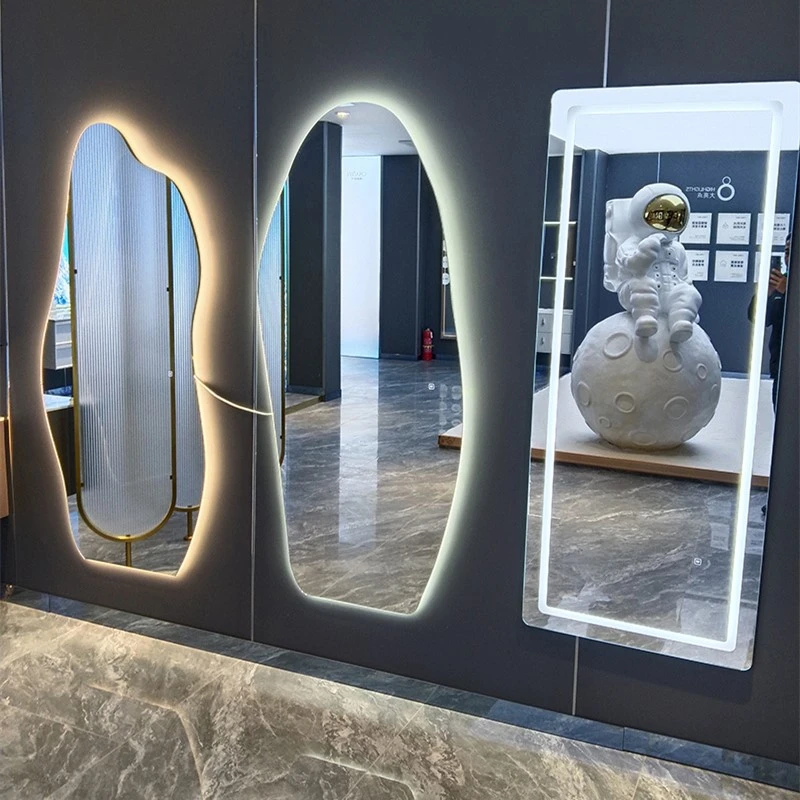
Structural and protective molding revolve around the overall assembly. The frame is mostly made of aluminum alloy or stainless steel profiles, precision machined by CNC and surface anodized or sandblasted, providing both mechanical protection and electromagnetic shielding while meeting aesthetic requirements. Internal circuit boards, sensors, and communication modules are assembled using SMT surface mount and through-hole soldering, then coated with conformal coating and sealed with waterproof gaskets to create a moisture-proof, dust-proof, and corrosion-resistant sealed environment. For high-humidity applications such as bathrooms, rigorous IP rating testing is required. The back cover and heat dissipation structure are topologically optimized based on heat source distribution, combined with thermally conductive silicone and convection airflow design to ensure the thermal stability of the electronic system during long-term operation.
The final molding stage involves system integration and functional verification. This includes optical alignment inspection, display color consistency testing, touch sensitivity calibration, waterproof sealing testing, and environmental adaptability assessment. Only after all indicators meet design requirements can the finished product be packaged and shipped.
In summary, the manufacturing process of smart mirrors encompasses multiple stages, including substrate precision machining, reflective film preparation, display and touch panel bonding, structural protection assembly, and system verification. These stages are interconnected and mutually reinforcing. Only by meticulously selecting materials, controlling process parameters, and adhering to quality control standards can smart mirrors achieve high levels of image fidelity, display clarity, interactive sensitivity, and durability, providing high-quality terminals that combine technological sophistication and practicality for smart homes and commercial spaces.