

The Composition Method of Smart Mirrors: Building a Systematic Path that Combines Functionality and Aesthetics
Dec 26, 2025
Leave a message
The unique value of smart mirrors stems from the organic integration of traditional mirror surfaces with display, sensing, and interaction technologies. Their composition method must balance optical performance, electronic integration, and structural reliability. Through the collaborative design and precision assembly of multiple modules, an integrated effect of information presentation and mirror reflection is achieved.
The basic components of a smart mirror begin with an optical reflective layer and a substrate structure. High-quality float glass or ultra-clear glass is typically used as the substrate to ensure high light transmittance and low dispersion, providing a pure base for mirror reproduction. A metallic reflective film, such as a silver or aluminum mirror film, is coated on the back of the substrate, forming a uniform and dense high-reflectivity surface through a vacuum evaporation process. This film not only determines the brightness and clarity of the mirror image but also needs to possess good moisture resistance and oxidation resistance to remain stable in high-humidity environments such as bathrooms. For models with a display-to-hide function, an electrochromic or polymer-dispersed liquid crystal film can be added between the reflective layer and the substrate. The electric field control enables the switching between transparent and fogged states, creating conditions for the intervention of displayed content.
The display and touch modules are the core of information interaction in a smart mirror. The implementation involves bonding a liquid crystal display (LCD) or organic light-emitting diode (OLED) panel to a substrate using optical adhesive, ensuring pixel-level image quality matches the mirror's viewing angle. To maintain touch sensitivity and display transparency, an ITO conductive glass or capacitive touch sensor is often applied to the panel surface, and a high-precision bonding process eliminates air bubbles and displacement. The driving circuit and main control chip are integrated into an internal motherboard, interconnecting with the display panel and sensors via a low-power bus, supporting real-time rendering and response.
Sensing and communication components endow smart mirrors with environmental awareness and remote linkage capabilities. Common configurations include light sensors, temperature and humidity sensors, human proximity sensors, and microphone arrays, used for automatic brightness adjustment, environmental status monitoring, and voice interaction, respectively. Communication modules typically employ Wi-Fi, Bluetooth, or Zigbee protocol stacks to achieve data exchange and command reception with smart home systems, making the mirror a scene control entry point.
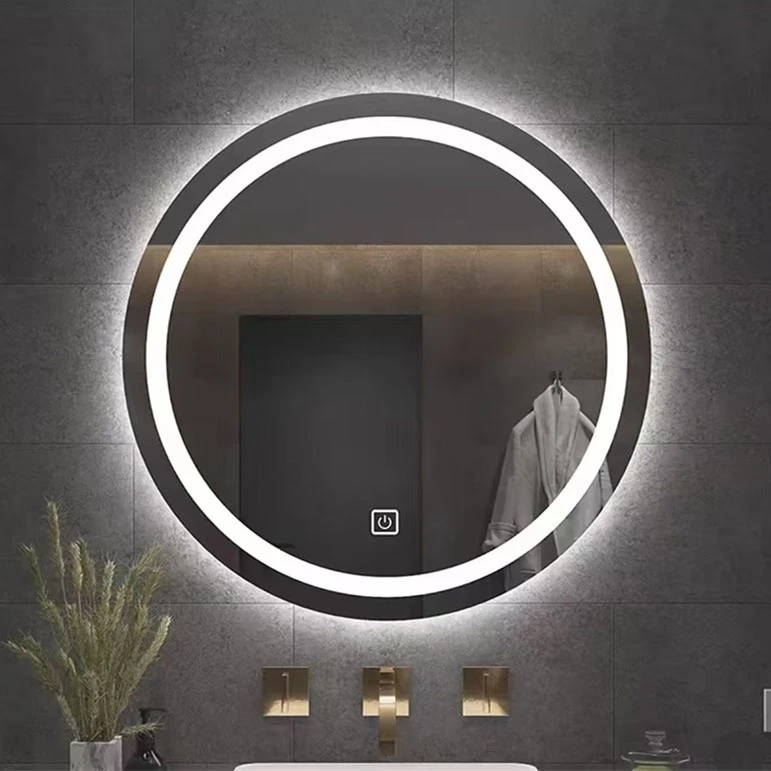
The structure and packaging method determine the overall stability and safety of the smart mirror. The frame is often made of aluminum alloy or stainless steel profiles, anodized or sandblasted to balance strength and aesthetics, while providing electromagnetic shielding and mechanical protection for internal components. In high-humidity or high-temperature environments, the circuit board and seams must be rigorously protected with waterproof strips, silicone seals, and moisture-proof coatings to ensure electrical safety and long-term reliable operation. The back cover and heat dissipation structure are optimized based on the internal heat source distribution, employing heat-conducting sheets and convection channels to prevent high temperatures from affecting display and electronic performance.
System integration and debugging are the final stages of the assembly process. After final assembly, each functional module undergoes optical alignment, touch calibration, display color consistency testing, and waterproof sealing verification to ensure smooth mirror and screen switching, accurate touch control, and distortion-free information presentation. At the software level, an embedded system and interactive interface are loaded, completing the integration with cloud services and localized function configuration.
In summary, the assembly method of a smart mirror encompasses multiple technical paths, including optical reflection construction, display and touch integration, sensor and communication embedding, structural protection packaging, and system integration. Only by comprehensively considering material selection, process precision, and functional synergy can a smart mirror product be created that combines clear mirroring, sensitive interaction, and stable performance, providing a highly integrated visual interactive terminal for smart homes and commercial spaces.