

Smart Mirror Solution: Building a New Paradigm for Integrated Smart Interaction and Scene Fusion
Dec 29, 2025
Leave a message
Against the backdrop of accelerated digital transformation in smart homes and commercial spaces, smart mirrors have evolved from simple reflective tools into comprehensive terminals integrating information collection, visualization, and multi-device linkage. A complete smart mirror solution must be user-centric, integrating four key elements: hardware architecture, software platform, interaction logic, and scene adaptation. This forms a closed-loop system from design and deployment to operation and maintenance, ensuring stable, reliable, superior user experience, and scalable application value.
The hardware architecture is the physical foundation of the solution. Its key lies in ensuring the quality of the high-transmittance substrate and high-reflectivity film layer, guaranteeing color accuracy and clear details in the mirror image. The display module must use a high-brightness, wide-color-gamut LCD or OLED panel, coupled with low-latency driving circuitry, to achieve seamless switching between information presentation and mirror reflection. The touch layer employs capacitive or infrared sensing technology to ensure the sensitivity and accuracy of multi-touch. Sensing components include light, temperature and humidity, human proximity, and voice acquisition modules, providing data support for environmental perception and contactless interaction. Structurally, the waterproof, anti-fog, and explosion-proof ratings should be selected based on the usage scenario. A robust and durable shell should be constructed using aluminum alloy or stainless steel frames and sealing processes to meet the different protection requirements of bathrooms, dressing rooms, or public spaces.
The software platform is the central nervous system of the solution. An embedded operating system is responsible for underlying hardware drivers and resource management, supporting real-time rendering, touch response, and multi-task scheduling. The upper-layer application framework needs to provide a customizable information interface, enabling automatic push notifications of public information such as time, weather, schedules, and news, and access to cloud databases to obtain personalized content. For value-added functions such as health management, virtual try-on, and makeup simulation, the platform should have algorithm integration and computing power utilization capabilities to ensure rapid interactive feedback and realistic results. The communication protocol stack is compatible with mainstream standards such as Wi-Fi, Bluetooth, and Zigbee, ensuring seamless interconnection with smart home hubs or mobile terminals, enabling contextualized control of devices such as lights, air conditioners, and curtains.
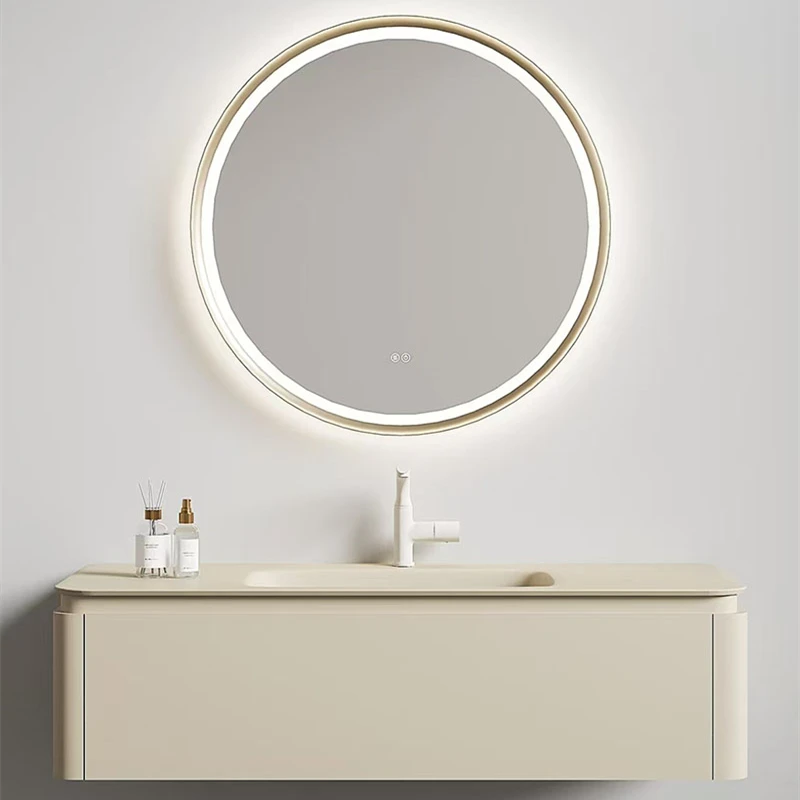
Optimization of the interaction logic determines the quality of the user experience. The solution should support multiple modes, including touch, voice, proximity sensing, and remote wake-up from mobile terminals, and automatically switch interaction priorities according to the scenario. For example, in private spaces, the screen can remain silent by default, gently lighting up when a user approaches; in public display environments, it can remain constantly lit and offer more access to functions. Multimodal interaction requires the integration of noise suppression, semantic understanding, and gesture recognition algorithms to improve recognition accuracy and reduce the probability of false triggers. Privacy protection mechanisms must be implemented throughout the entire interaction process, with authorization management, data encryption, and localized processing for operations involving image and voice collection to ensure information security.
Scenario adaptability is key to the effectiveness of the solution. In home scenarios, smart mirrors can be linked with morning routines to announce weather and schedules and adjust indoor lighting; in bathroom scenarios, waterproof and anti-fog designs can be incorporated to provide health monitoring and entertainment services; in commercial retail or fitness spaces, virtual try-on, body shape analysis, and marketing pushes can be added to improve customer engagement and conversion rates. The solution should provide modular hardware configurations and software interfaces, allowing for flexible tailoring to different space functions and budgets, and supporting future function expansion and version upgrades.
Deployment and maintenance are equally indispensable. The solution should be accompanied by professional installation guidance and debugging tools to ensure optical alignment, consistent display colors, and adequate waterproof sealing. Remote diagnostics and log analysis capabilities help maintenance personnel quickly locate faults, reducing the frequency of on-site maintenance. Regular firmware and content updates ensure system security and functional freshness, extending equipment lifespan.
Overall, the smart mirror solution is based on high-performance hardware, centered on intelligent software, linked by natural interaction, and guided by scenario integration, constructing a complete chain covering perception, decision-making, execution, and service. Through systematic design and continuous optimization, it not only enhances the technological content and practical value of mirror applications but also provides a replicable and evolving interactive entry point for smart homes and commercial spaces, helping the industry move towards a higher level of digitalization and intelligence.